
Facebook Ads for Fitness Professionals: What Actually Works (And What's Holding You Back)
A conversation with Bec Anderson, founder of The Growth Agency
If you've ever thought "Facebook ads just don't work for me," I want you to read this, because I said almost the same thing before sitting down with Bec Anderson.
Bec is the founder of The Growth Agency, a marketing agency built specifically for gym owners across Australia and New Zealand. She's got 17 years in the fitness industry. She started as a PT, worked her way through big box facility management, then bought her own gym. Weeks before COVID hit.
Yeah. That kind of baptism by fire.
What came out of it was a deep, hard-won understanding of Facebook ads, because when you've just bought a gym and a global pandemic shuts it down, you figure things out fast. Bec rebuilt her business using Facebook ads, then realised the whole fitness industry needed someone to show them how to do it honestly.
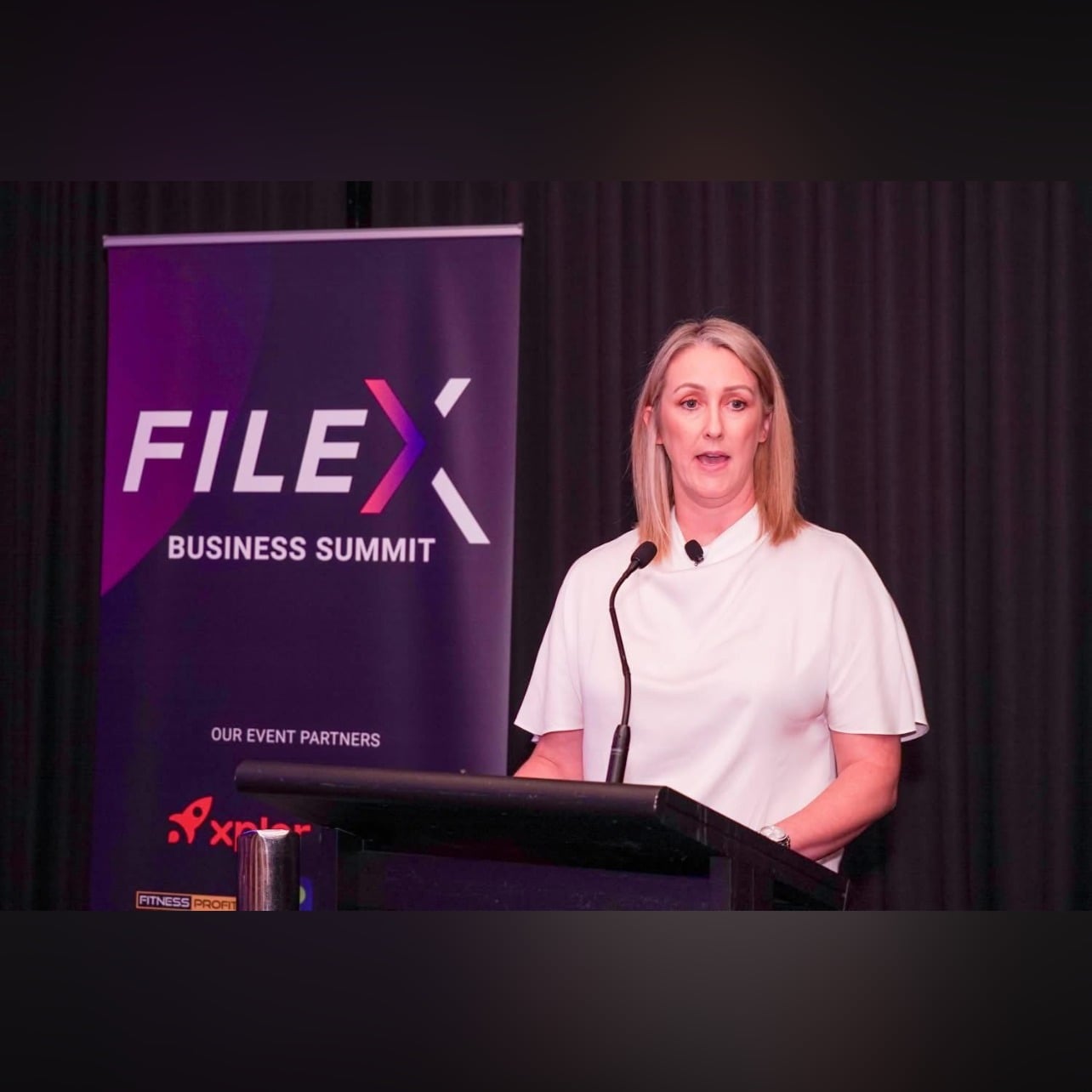
Here's what she shared with me.
Before you spend a single dollar, know these two numbers
This was the first thing Bec said, and it completely reframed how I think about ads.
Most gym owners and PTs jump into ads without knowing their numbers. Then when the cost per lead creeps up, they panic. Bec says that panic is almost always unnecessary, because they're looking at the wrong metric.
The two numbers you actually need:
1. Your CAC (Cost to Acquire a Client) How much does it cost you to get a new person through the door and onto a weekly debit? Not a lead. A paying client.
2. Your LCV (Lifetime Client Value) If someone pays you $65 a week and stays for eight months, they're worth around $2,000 to your business. That number changes everything.
Once you know both, cost per lead stops being scary. A $50 lead looks very different when you know that one in four of those leads ends up being worth $2,000 to you.
What does a realistic starting budget actually look like?
Bec recommends starting at around $30 a day for a proper lead campaign. But if that still feels like a lot, she suggests dipping your toe in with just $5 to $7 a day across three different campaign types:
Brand awareness. A selfie video of you in your facility, member testimonials, something that just says this is who I am and what I do
A lead magnet. Something genuinely useful, like a high-protein recipe book. Around $1 per download, and now you've got emails to market to
Traffic to Instagram. Get people to follow you, then reach out personally. "Hey, thanks for the follow. Are you here for the content, or can I help you with some health and fitness goals?" She calls this one of the most underrated campaigns running right now
And the timing of lead magnets matters too. Running a Christmas recipe book in December, filling your funnel, then launching a Boxing Day sale to that list? That's strategy, not guesswork.
What's actually working in ad creative right now
Short answer: video. Specifically, real video.
Bec is emphatic about this. Selfie videos are outperforming polished, produced content right now. You don't need a photographer. You don't need lighting or a microphone setup. In fact, that kind of content will perform worse than you just grabbing your phone and talking to the camera.
The best performing ads she's seeing right now combine a talking-head video of you speaking directly to the camera, with footage of real people training in your facility. Not athletes. Not models. People who look like your actual clients.
"As a 43-year-old woman," Bec said, "I want to see women that look just like me training in the facility. Then I'm like, okay, it's not scary. I'll find out more."
The more AI-generated and polished content floods social media, the more people crave something that feels genuinely human. Your realness is the feature.
Which metrics should you actually watch?
Once your ads are live, Bec looks at four things:
Cost per lead. Ideally under $30 (though expect closer to $30 in metro areas; New Zealand can be as low as $10 to $15)
Cost per click. Are people actually responding to your copy and creative?
Impressions. How many people are seeing it, and what's it costing you to reach 1,000 of them?
Frequency. Are the same people seeing your ad too many times?
She compares data over seven days, then three days, then day-on-day, looking for trends, not snapshots.
The two most common mistakes
Mistake one: treating ads as a cost, not an investment.
Your ad spend should sit in your P&L the same way rent and insurance do. It's not optional if you want to grow. Mindset first.
Mistake two: turning ads off too soon.
Bec sees this constantly. Someone spends $90 over three days, doesn't get a lead, panics, and turns everything off. All that's happened is they've wasted $90 without giving the campaign enough time or variety to tell them anything useful.
She builds every campaign with five to eight different creatives. Each one needs to spend at least $30 before you know whether it's working. If it hits $45 and produces nothing, turn that creative off, but keep the others running and test something new.
Meta's algorithm (the Andromeda update from last year) is actively looking for variety. It'll find your top performers and push budget toward them. But it needs options to test first.
When is it time to hand it over to a professional?
Bec's honest answer? Immediately, for most people.
"We're not marketers. We were never meant to be."
But more practically, when it's causing you stress, when you're launching multiple campaigns and getting frustrated, when your business isn't growing the way it should be, that's the sign.
She put it this way: "I wouldn't do my own tax returns. I pay my accountant. Pay a professional."
And the difference in results is real. The gap between someone running ads themselves and getting five new clients a month, versus a well-built top-to-bottom-of-funnel campaign getting thirty, that's not a small difference.
For the woman who keeps putting it off
This one's for you, whether you're a gym owner or a PT who's been thinking about running ads for a while.
Bec said something that stuck with me: the cost of waiting is real, even when it's invisible.
While you're waiting, someone in your area is showing up on the platform. They're building awareness, building trust, building a presence. Attention is currency right now, and if you're not spending it, someone else is.
You don't have to go all in straight away. Start with $5 to $7 a day on a brand awareness campaign. Get your face out there. Build a little momentum.
But start.
"If you're the world's best trainer but the world's biggest secret," Bec said, "you're not going anywhere."
Bec Anderson is the founder of The Growth Agency, a marketing agency for gym owners across Australia and New Zealand. You can find her education and resources on her socials. She gives a lot of her best content away for free.
Dani x


